Indian Meal Prep & Planning
Most of us who grew up in India in the 80s and 90s did not eat leftovers. The warm climate meant you cooked fresh every day, and there were always enough hands in the kitchen to make that possible - a joint family, household help, someone who knew what they were doing. Then you moved abroad, or had kids, and suddenly you were the chef, the sous-chef, and the dishwasher all in one without any help. This collection is everything I learned about meal planning, prepping, and cooking Indian food without losing my mind on a Tuesday evening.
Start with the batch cooking bases, the onion tomato masala, especially. Cook it once on a Sunday, and you have the base for butter chicken, dal makhani, pav bhaji, and vegetable biryani for the rest of the week. Half a cup into a pan with your protein or vegetables, and dinner is thirty minutes away. Curry one night, dal the next, biryani over the weekend. All from the same batch you made on Sunday.
Jump to:
PICK YOUR STARTING POINT
Guides, bases & batch recipes
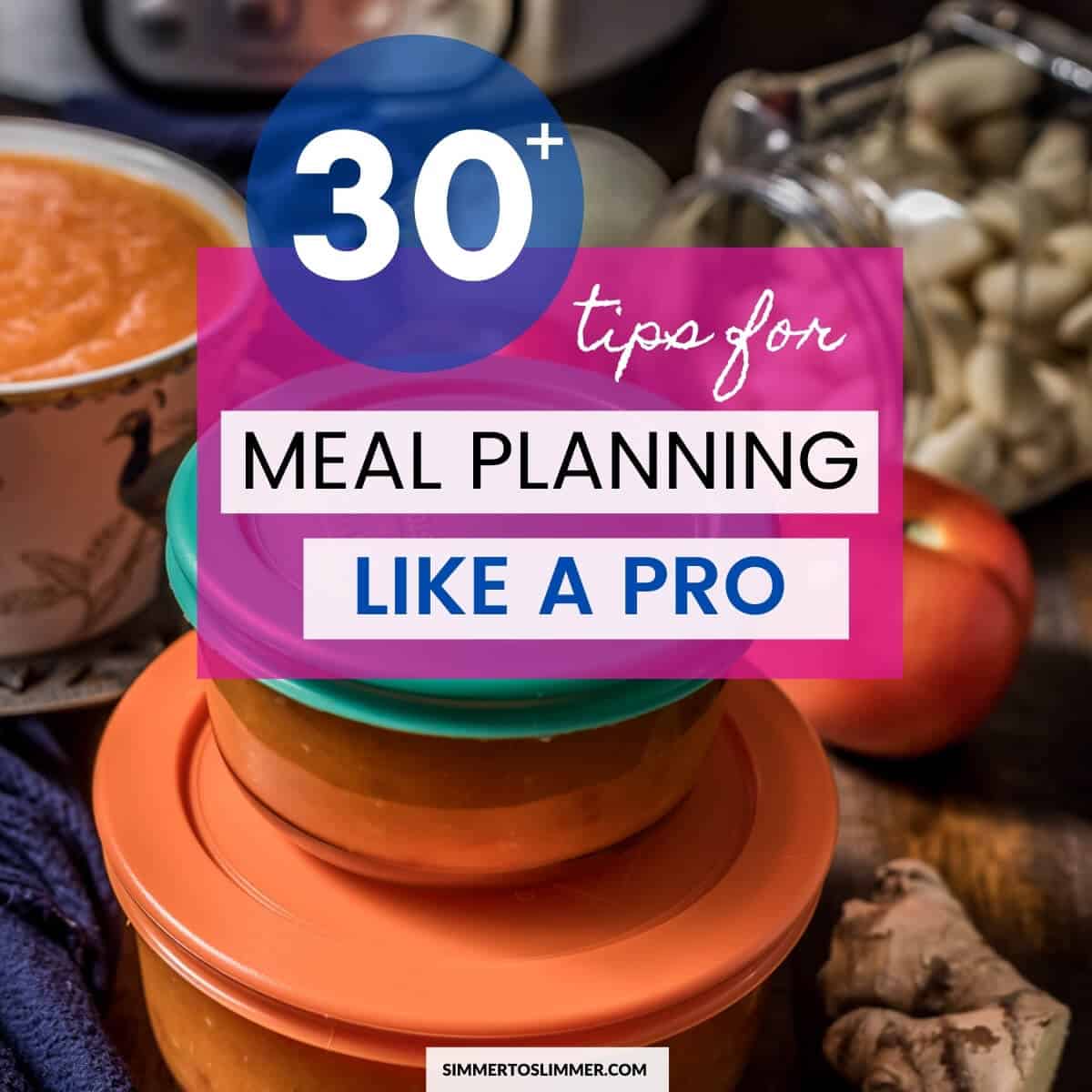
The first time I made onion tomato masala and stored it in the fridge, it changed everything. I realised I could cook in 30 minutes on a weeknight. Anything from dal to biryani - the prep work was already done. No chopping onions, no dicing tomatoes, no mincing ginger and garlic, no standing over the pan waiting for the raw smell to cook out. Thirty minutes saved, every single day.
Then I started pre-cutting bhindi and cabbage over the weekend and keeping them in the freezer. No cutting, no chopping during the week. That is what this system gave me: time, calm, and the ability to actually enjoy cooking on a weeknight instead of dreading it.
Meal Planning Guides
The thinking behind the system. How to plan an Indian week of cooking, how to theme your meals, and what actually works in a real kitchen with real time constraints.
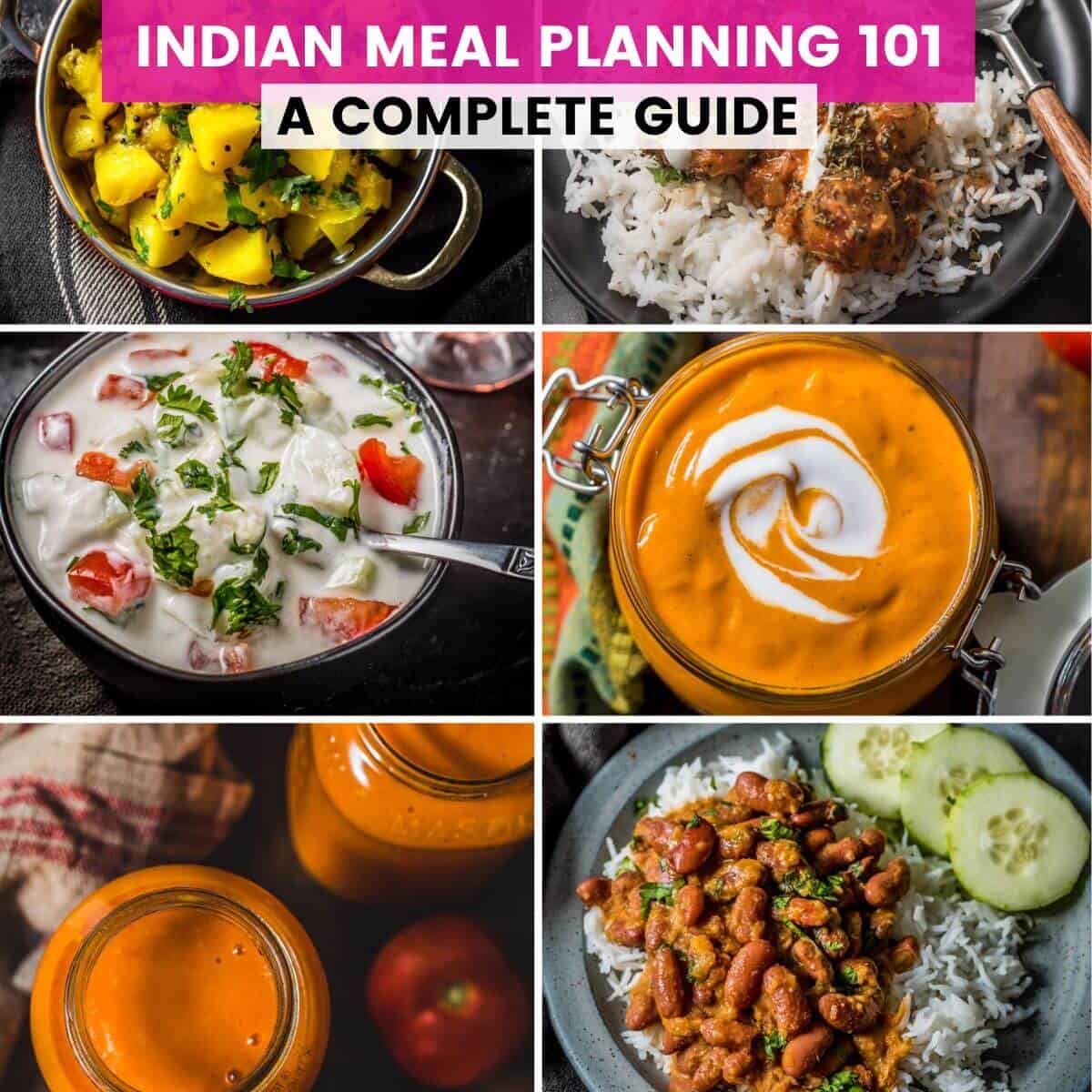


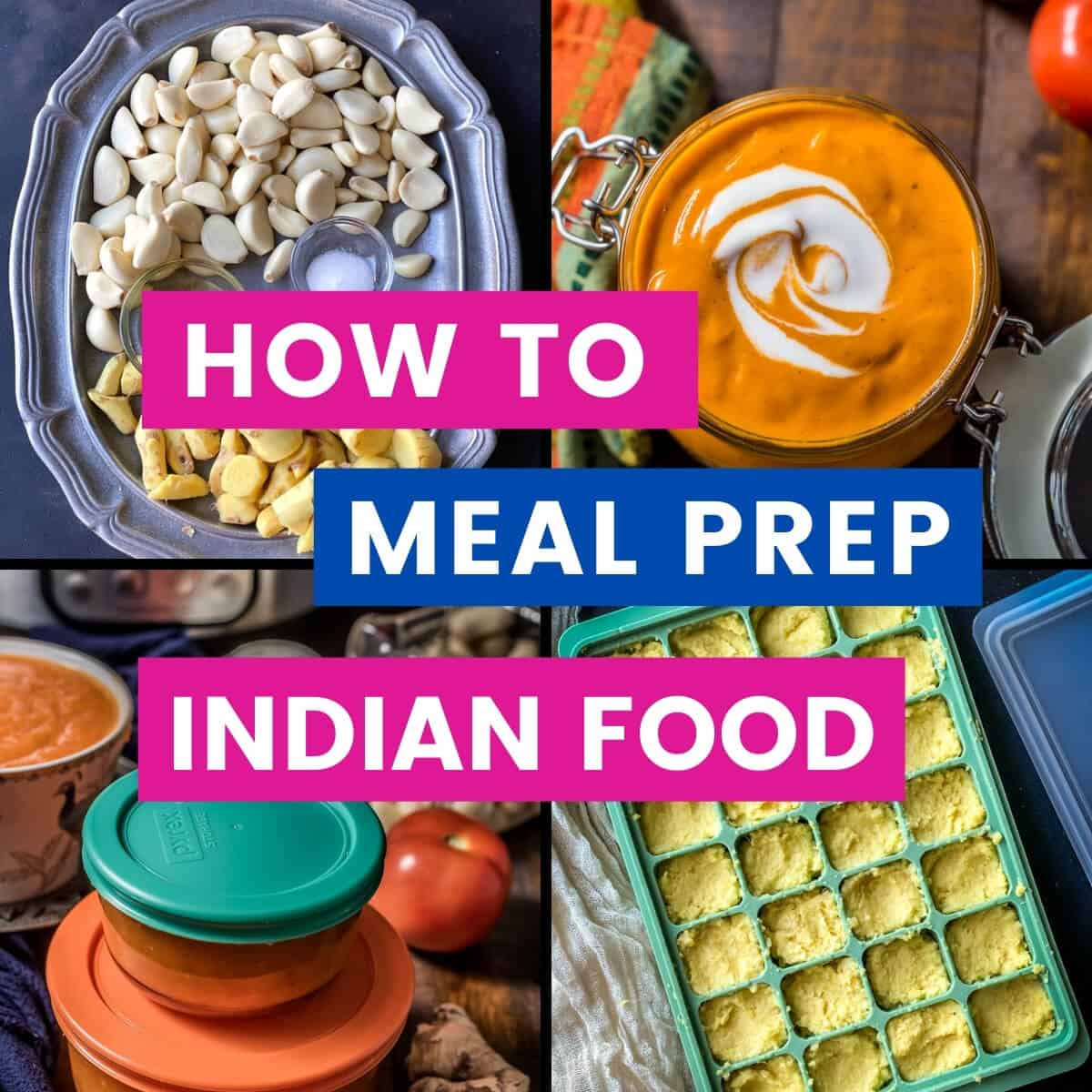
Meal Prep Guides
The practical guide to what to prep, in what order, and how to store it so nothing goes to waste.
Tools & Equipment
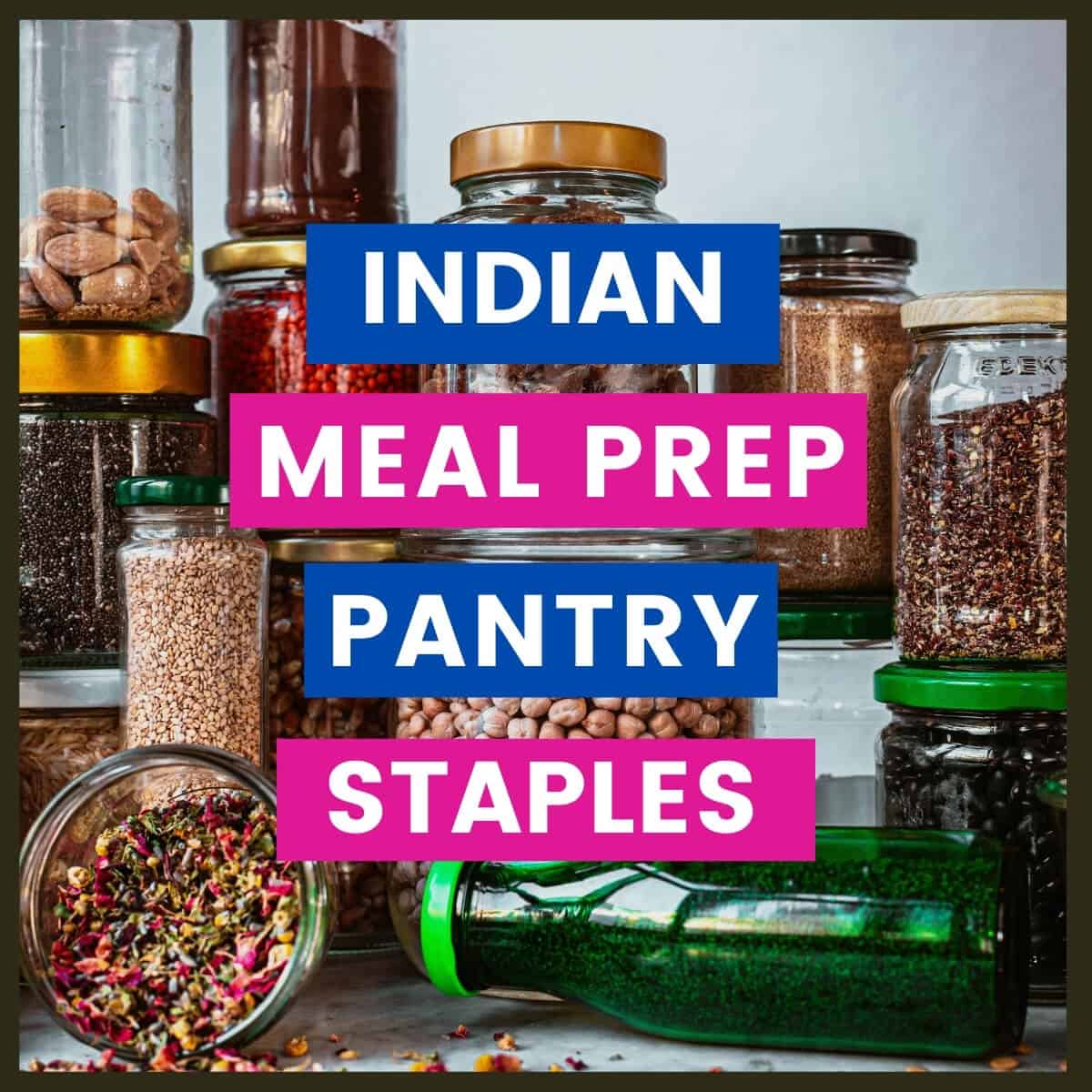
What containers work, what tools are worth buying, and how to shop for a week of Indian cooking. For the pantry staples that make Indian meal prep possible, see the Kitchen Basics pantry guide.


Batch Cooking Bases
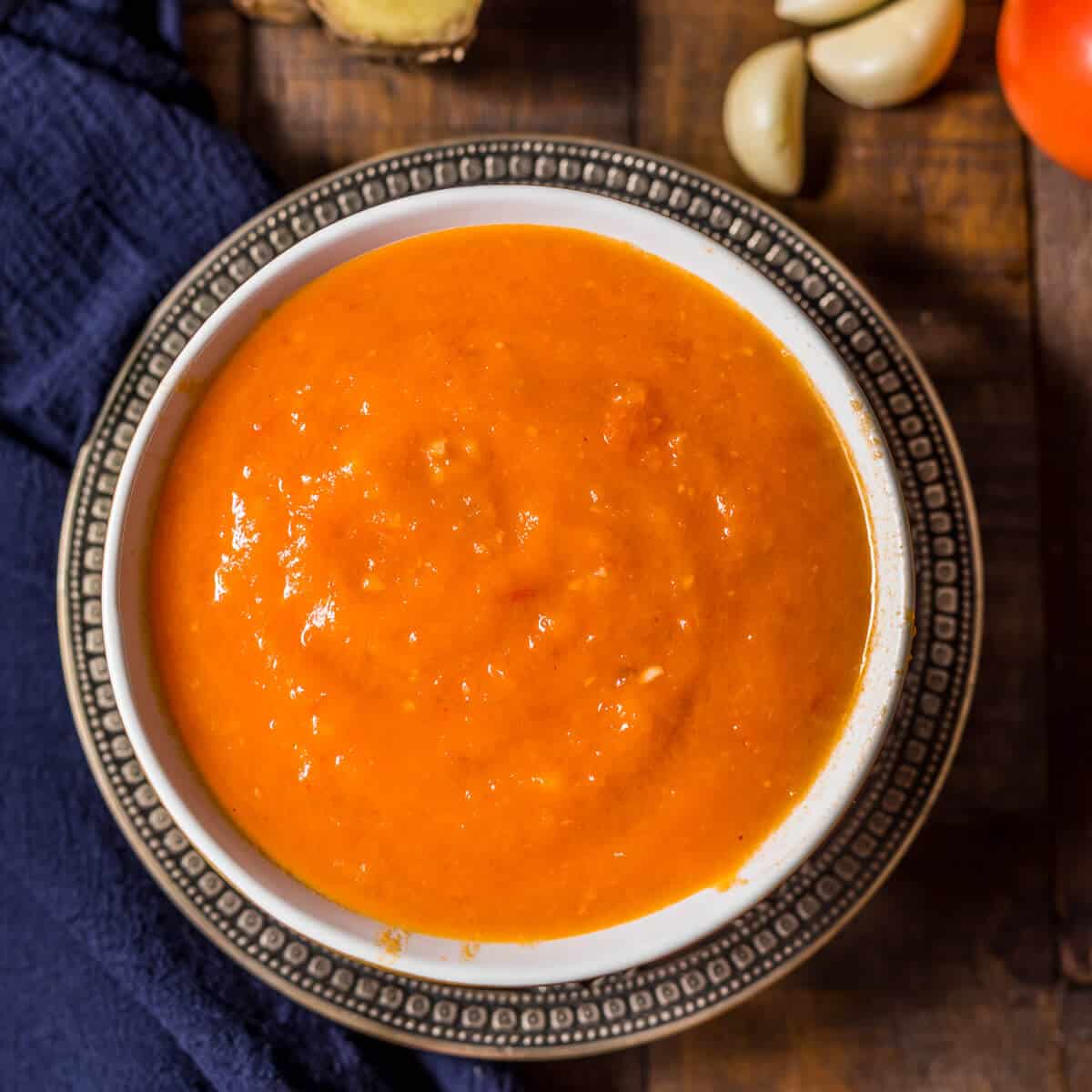
Make these on Sunday, and the rest of the week's cooking becomes assembly rather than cooking from scratch. The onion tomato masala unlocks dishes across Curries, Dal & Legumes, and Rice & Biryani - one batch, a week of cooking.
Dinner Party & Entertaining
Sample menus and recipes for feeding a group without spending the whole day in the kitchen.

THE SUNDAY BATCH
A meal prep week
MEAL PREP IDEAS
The week in practice
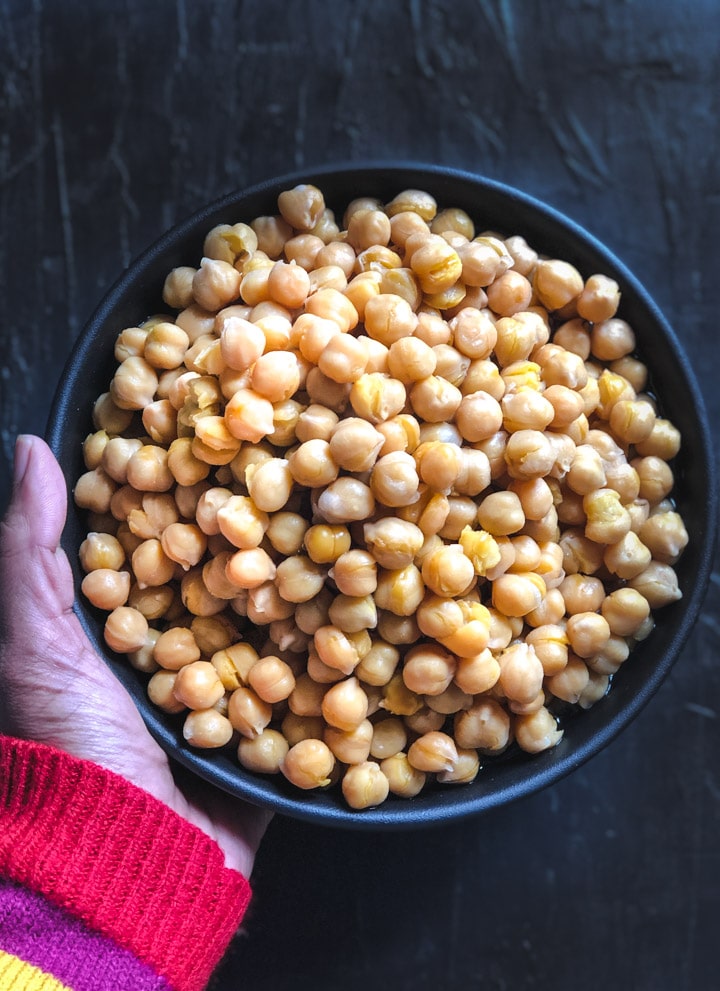
- Sunday batch session → Make onion tomato masala, pre-cut vegetables, make chapati dough, and batch-cook chickpeas. Monday through Friday is light cooking and assembly.
- Monday → Tawa pulao with cucumber raita
- Tuesday → Reheat leftovers
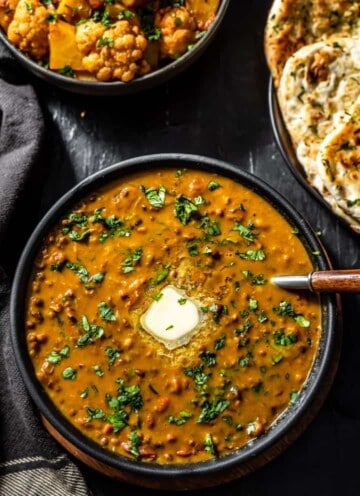
- Wednesday → Dal palak + cabbage sukka
- Thursday → Reheat leftovers
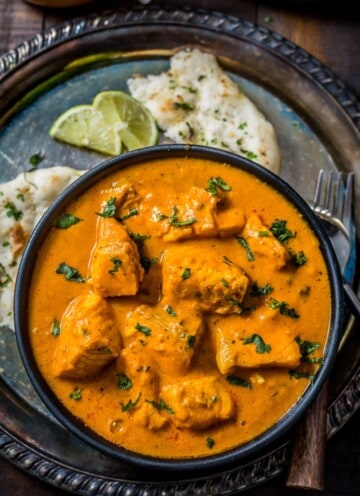
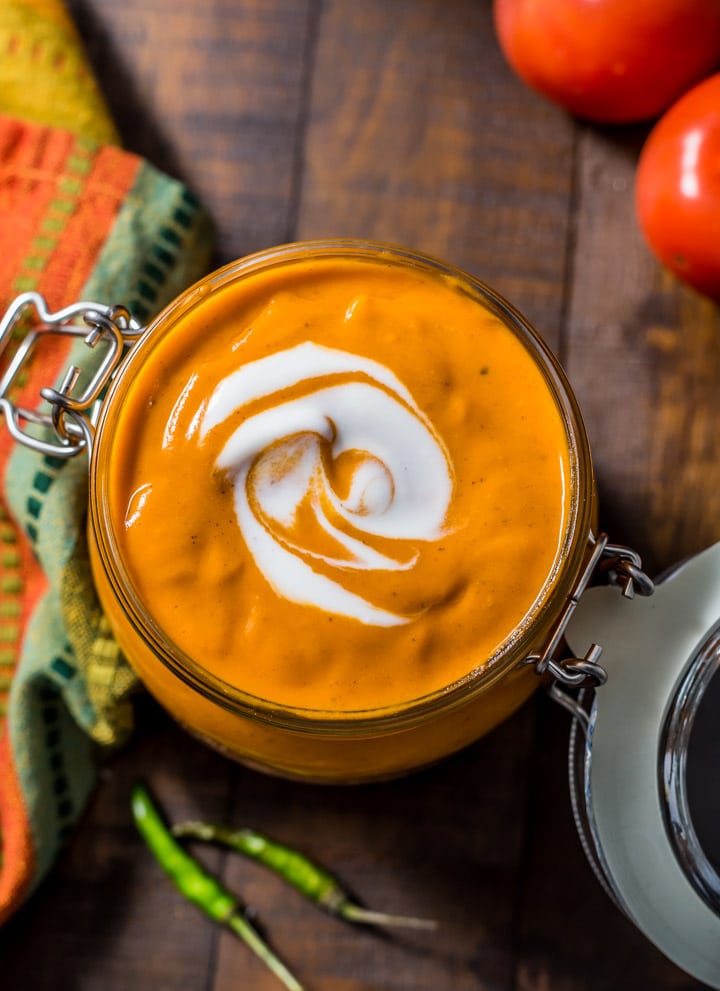
- Friday → Butter chicken using tikka masala sauce
- Weekend dinner party → Get ideas from this post on planning an Indian dinner party to help you prep and plan ahead.
FREQUENTLY ASKED
Questions about Indian meal prep & planning
Onion tomato masala. It is the base for more Indian dishes than any other single ingredient. Make a large batch, store it in the fridge for up to a week or freeze in portions: Dal, curry, biryani, pav bhaji - all of these start from the same base.
Up to a week in the refrigerator in an airtight container. Up to three months in the freezer. Freeze in ½-cup portions in a silicone freezer tray, then pull out a portion as you need for a dish.
Curries, dals, and legume dishes keep well in the refrigerator for 2 to 3 days and develop more flavour overnight. Cook twice a week, and you are covered. Roti dough keeps in the refrigerator for 2 to 3 days. Rotis and parathas are best made fresh, but freeze well for up to a month in a freezer bag.
The trick is knowing what to prep ahead and what to cook fresh. Prep ahead: onion-tomato masala, cooked dal, batch-cooked legumes, pre-cut vegetables, and chapati dough. Cook fresh: the final tempering (tadka), rice, and serve with fresh rotis made from the refrigerated chapati dough.
Not at all. There are two ways to approach this. The first is to cook complete dishes twice a week. Cook on Sunday for Monday, Tuesday, and Wednesday. Cook again on Wednesday for Thursday, Friday, and Saturday. Curries, dals, and subzis (side dish) work well this way. The second is to prep components on the weekend and cook fresh from them every night. Weeknight cooking then takes 20 to 30 minutes. I am in the second camp. Neither approach is wrong.
Glass containers for anything with turmeric. Turmeric stains plastic permanently. Stainless steel tiffins for packed lunches. Wide, shallow containers for curries and dals so they cool quickly before refrigerating. See the Best Meal Prep Containers guide for specific recommendations.
KEEP EXPLORING
Related Collections
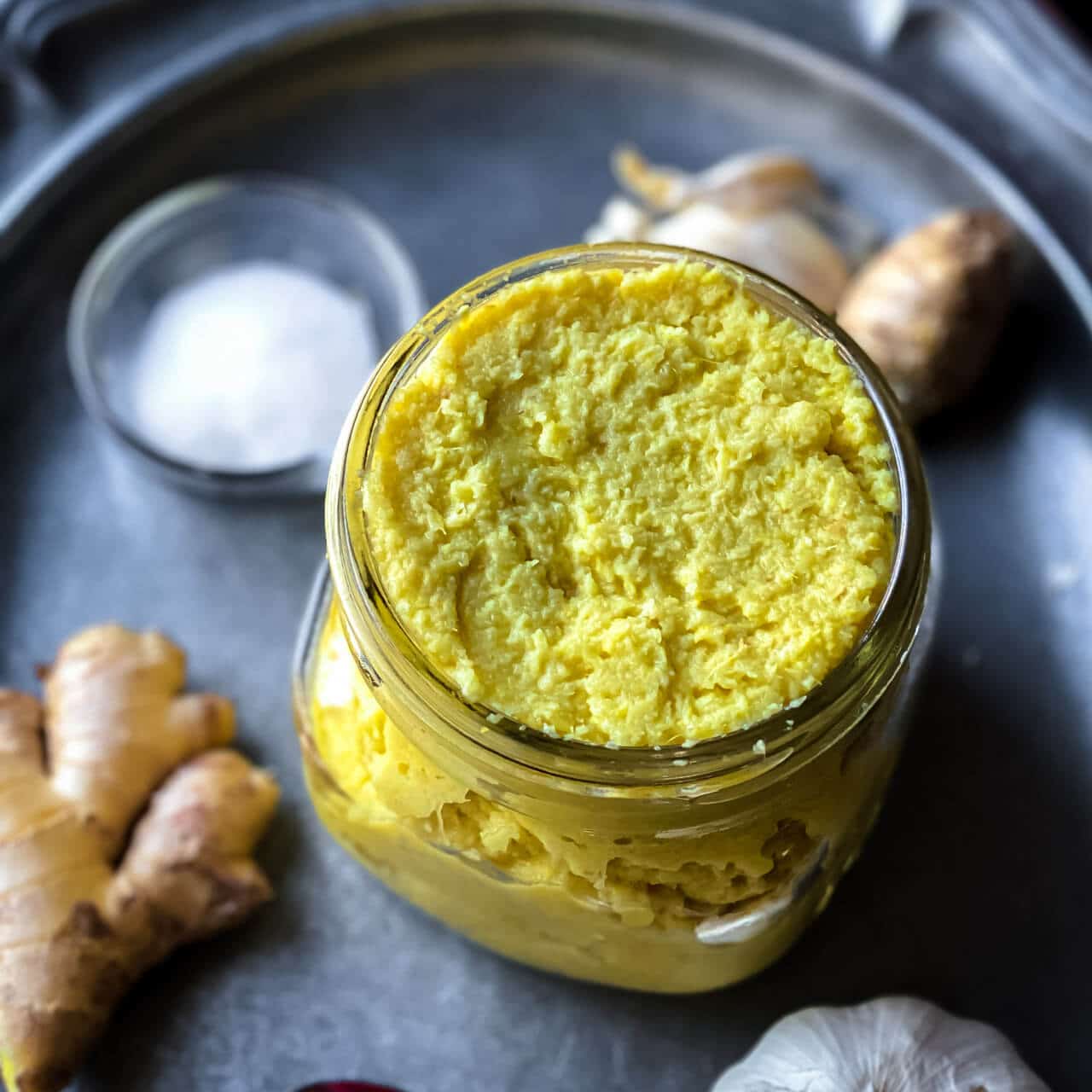
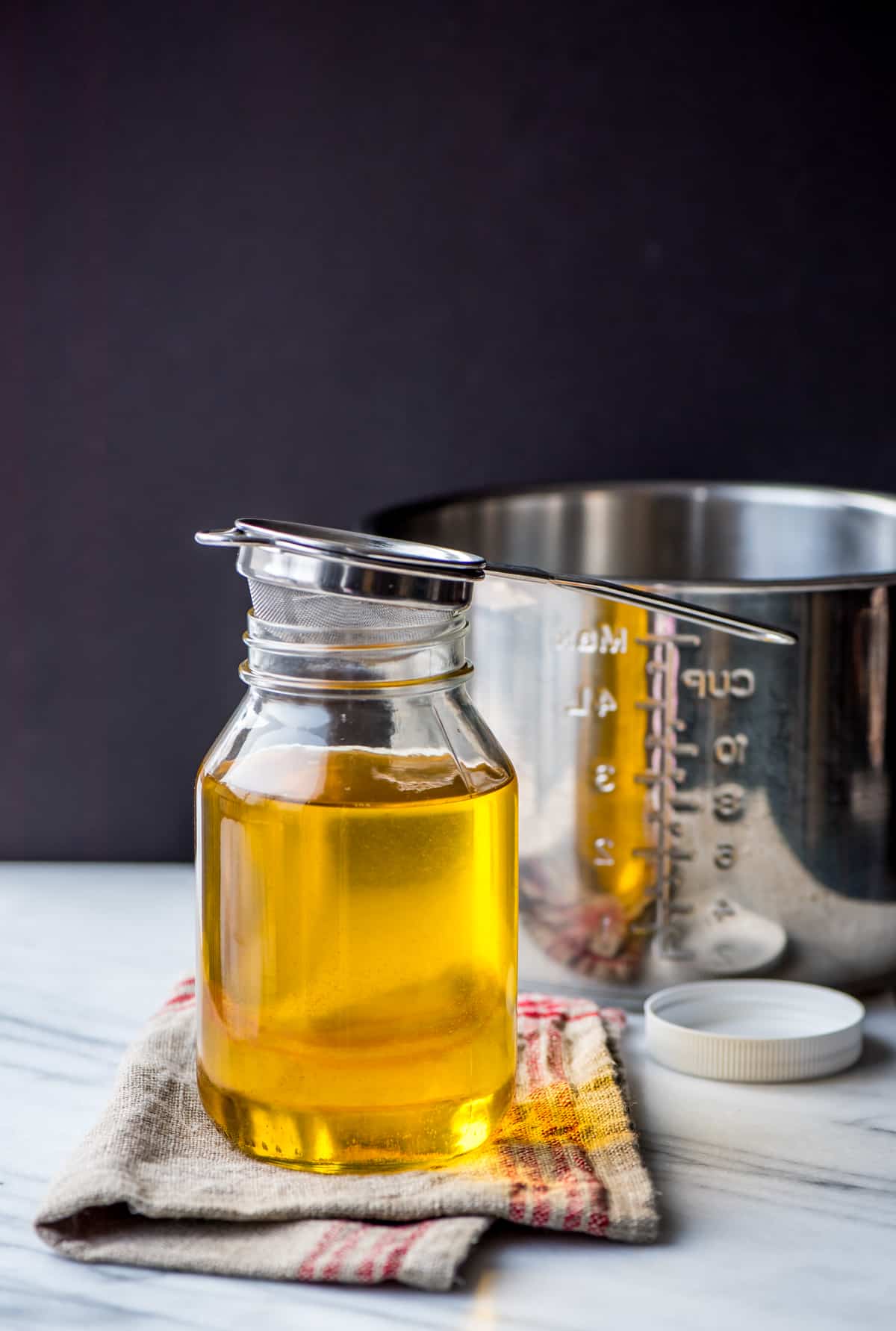
The onion tomato masala is the backbone of dishes in Curries and Dal & Legumes. The tikka masala sauce is what makes butter chicken and tikka feel effortless on a weeknight. The batch-cooked chickpeas go straight into chole and chaat in Starters & Street Food. And the pantry and technique knowledge that makes all of this work lives in Kitchen Basics - the spice guides, the ghee recipe, and the ginger garlic paste.